The case for a focused app
Second-home ownership creates a different maintenance problem.
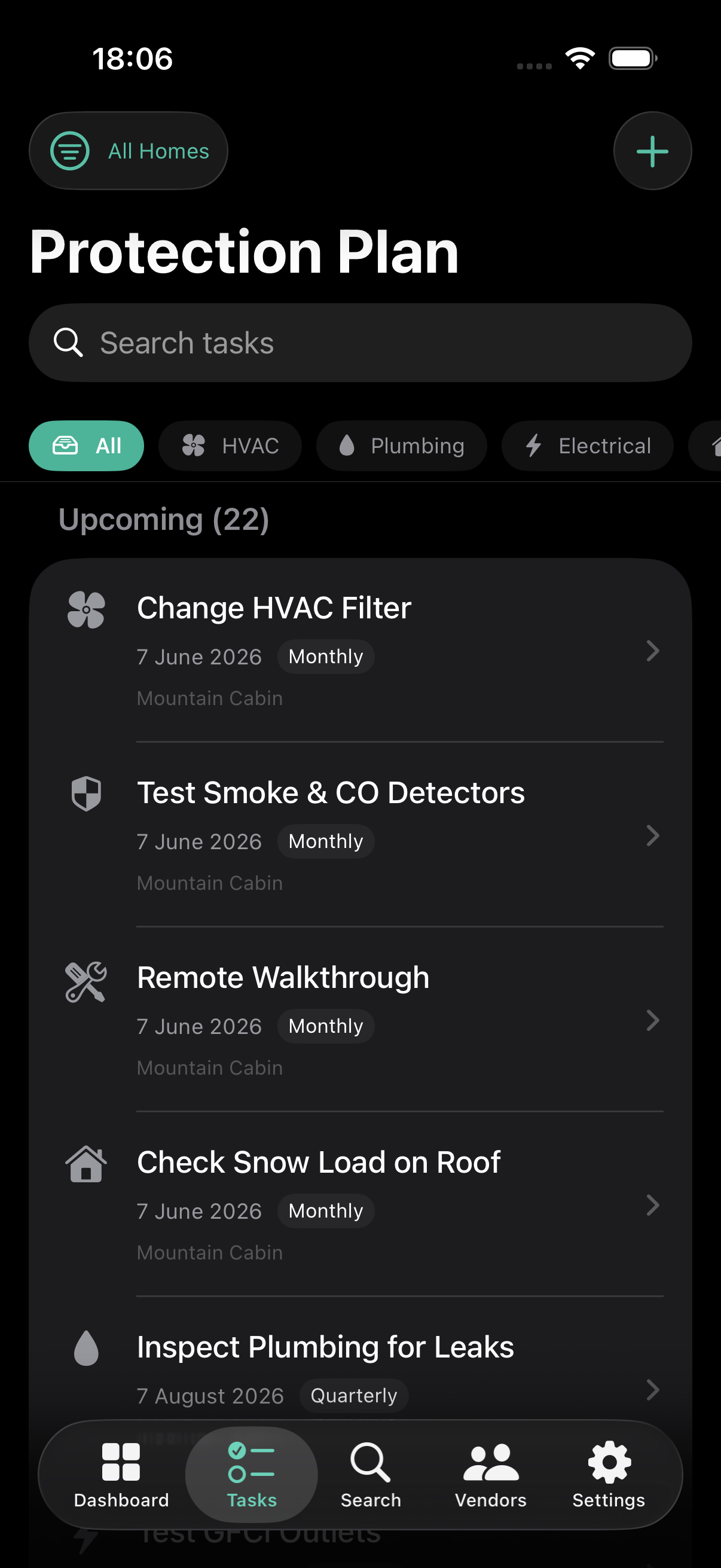
Primary-home apps assume you are there. Property-management software assumes you run rentals or teams. EstateKeep is narrower: personal records and recurring protection workflows for owners who self-manage homes they cannot check every day.
Market signals
Enough pain to matter, but narrow enough to require sharp positioning.
Positioning
The wedge is not productivity. It is risk memory.
The useful promise is specific: avoid losing track of the home’s operating history. EstateKeep turns repeat seasonal tasks, vendor details, photos, receipts, equipment notes, and costs into a local system of record.
Spreadsheets
Flexible but fragile, no structured photo or reminder flow.
Generic task apps
Good reminders, weak home records and vendor continuity.
Property managers
Powerful but expensive and often rental-focused.
EstateKeep
Personal, private, remote-home-specific maintenance memory.
Product promises we can defend
Clear value without overclaiming.
Organize the home file
Store policies, warranties, receipts, vendor notes, photos, and maintenance history for personal review.
Review the next trip
See due tasks, risks, and checklists before you arrive, then record what was completed.
Keep records private
Use the app without an EstateKeep account. Optional backups are exported only when you choose.
Sources